
Active listening vs passive listening for English learners
13 October 2026 · is passive listening effective for language learning · how to do active listening in english · does background english help you learn · active listening
By the end of this guide, you will be able to convert your daily YouTube routine into a focused training session that rapidly upgrades your English comprehension. You will know exactly how to switch from simply hearing background noise to actively acquiring new vocabulary on your phone.
🎧 Debunking the Background Noise Myth

You can learn English grammar using our free platform
Let's talk about the dream we have all had at some point: falling asleep with an English podcast playing softly under our pillow and waking up miraculously fluent the next morning. It is a tempting shortcut, but it is unfortunately a complete myth. Many intermediate language learners naturally ask, does background english help you learn? The short answer is that it does almost nothing for your active vocabulary or your grammar acquisition. When you leave English media running while washing dishes, replying to emails, or folding laundry, your brain treats it exactly like ambient noise. The human brain is an incredibly efficient survival machine, which means it is biologically designed to ignore predictable, non-threatening stimuli in our environment. If you are not paying direct attention, your subconscious mind filters the language out just like the hum of a refrigerator or the traffic outside your window.
While passive listening can help very young children pick up basic phonemes, B1 and B2 adult learners require a completely different approach. By the time you reach an intermediate level, your brain needs cognitive hooks to attach new words to existing concepts. If you hear a phrase you do not know in a background stream, you will simply skip over it without even realising you missed it. You might feel highly productive because you "listened to English for three hours today," but this is a classic cognitive trap known as the illusion of competence. As a rule of thumb, ten minutes of focused, conscious interaction is worth far more than ten hours of static background audio. If you want to build lasting mental pathways, you must stop treating English as a soundtrack to your lifestyle and start treating it as an active puzzle to solve. This means closing your background tabs, opening a single video, and preparing your mind to do some actual cognitive heavy lifting.
You can tell if you are drifting into passive habits by watching out for these signs:
- 📱 Checking your social media feeds in another browser window while the video plays.
- 💤 Hearing the sounds but being unable to explain the main point of the last two sentences.
- 📖 Reading the translated subtitles without actually listening to the English audio track.
🧠 Active Engagement vs Passive Hearing
You can learn English grammar using our free platform
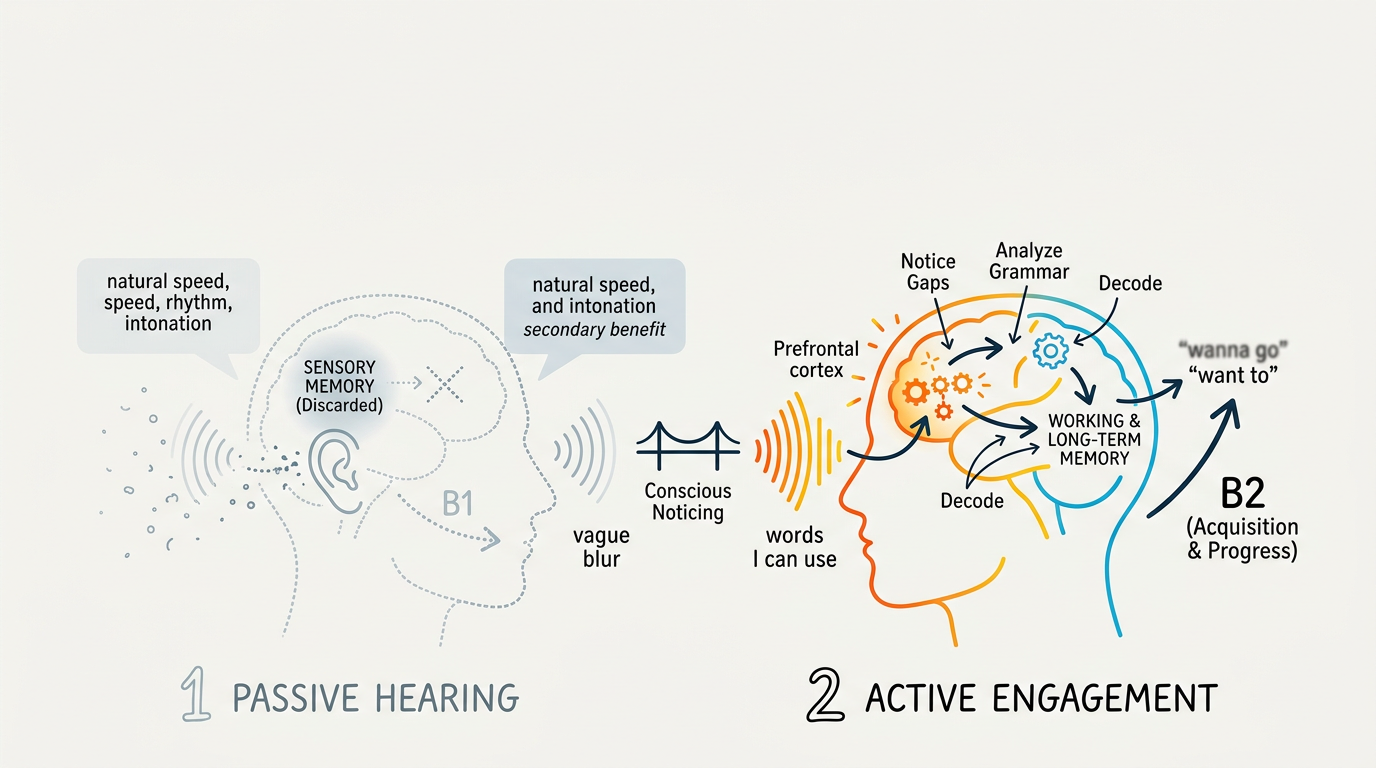
To understand why active listening vs passive listening english is such a critical debate, we need to look at what happens inside your head when you process sound. When you engage in passive listening, sound waves hit your eardrum, and your brain registers that English is being spoken. However, this acoustic information stays entirely in your sensory memory, which discards unneeded data within fractions of a second. The words do not make the mental leap into your working memory, let alone into your long-term storage where vocabulary actually lives.
So, is passive listening effective for language learning at all? It has one minor, secondary benefit: it can help you get used to the natural rhythm, intonation, and native speed of English. If you are completely exhausted and cannot study, having English playing is slightly better than absolute silence, but it will not help you climb from B1 to B2. To actually acquire new vocabulary and structures, your brain must perform a cognitive translation and evaluation. This process only happens when you actively notice a gap between what you hear and what you understand.
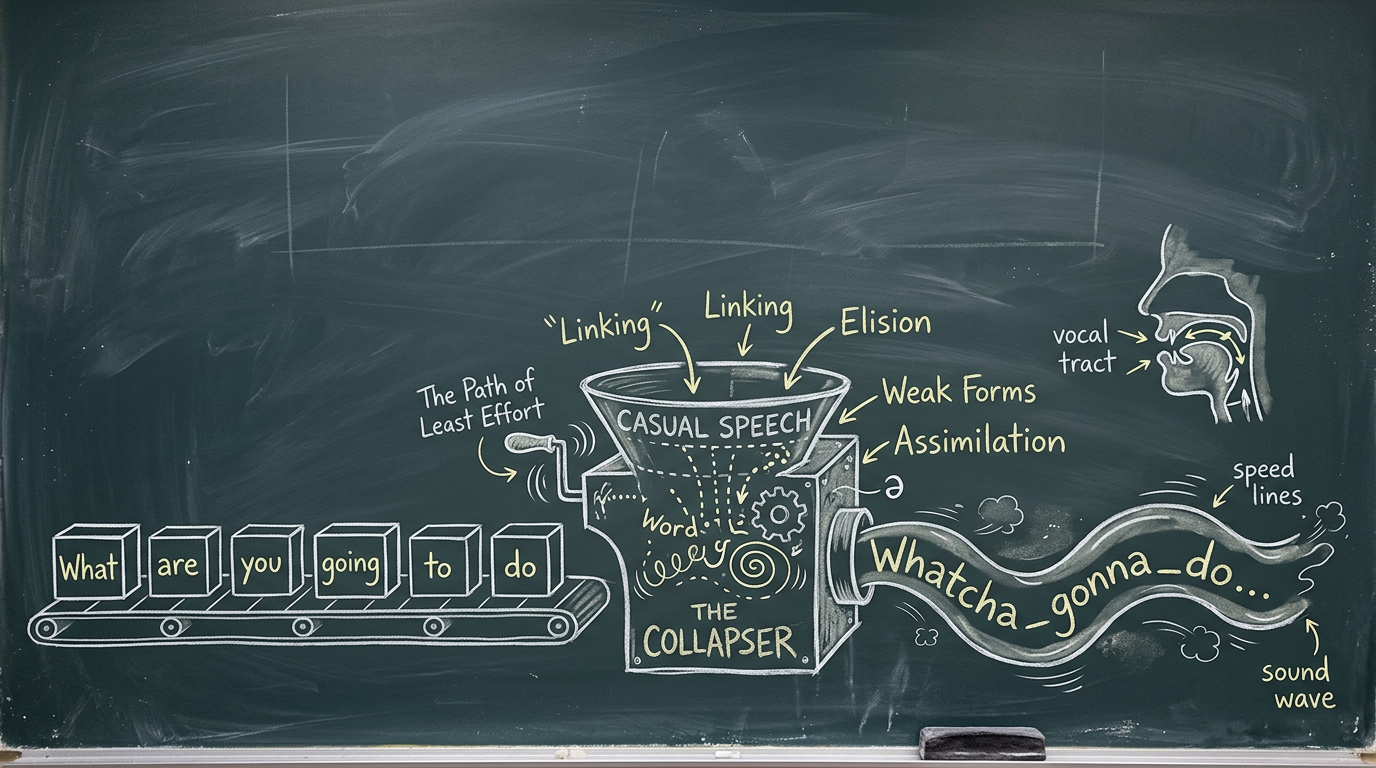
When you listen actively, your prefrontal cortex lights up as you try to predict the next word, analyse grammatical structures, and decode pronunciation features like connected speech. For example, when a native speaker says "wanna go," an active listener registers that "want to" has been compressed. A passive listener just hears a vague blur of sound and moves on. This conscious noticing is the vital bridge that moves words from "sounds I have heard before" to "words I can actually use in my own conversations." Without this active engagement, your brain remains a passive observer rather than an active participant.
⚡ How to Train Your Active Ears
You can learn English grammar using our free platform
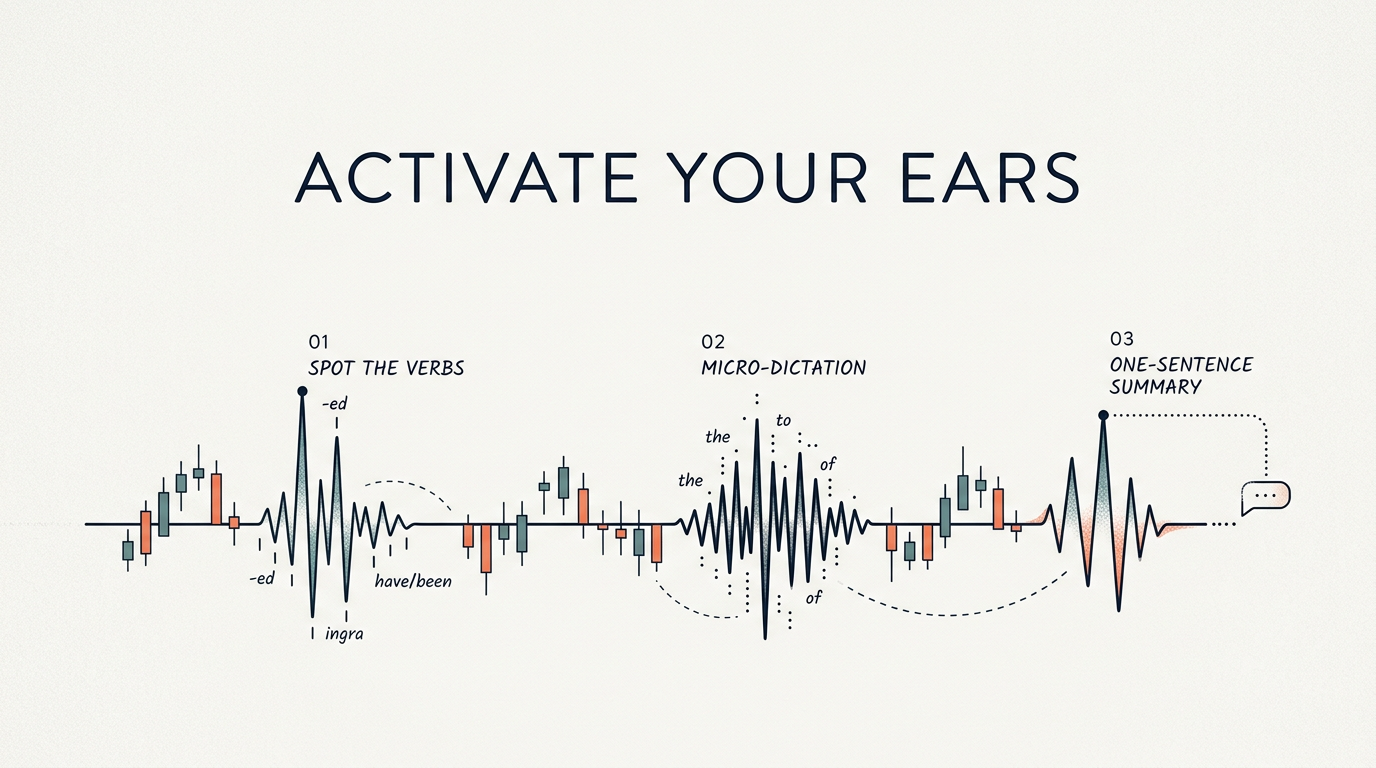
Knowing that you need to focus is one thing, but knowing how to do active listening in english on a daily basis is another matter entirely. You do not need hours of free time or a quiet desk set-up to do this; you can run highly effective drills right on your mobile screen during a short commute. Here are three practical exercises you can try with any short video today.
Exercise 1: Spot the Verb Tense
Choose a two-minute clip of an interview or vlog. Instead of trying to understand the whole story, focus your attention exclusively on the verbs. Every time you hear a verb, identify its tense in your mind. Is the speaker using the present perfect to connect the past to now, or are they using the past simple? This rapid-fire grammatical analysis forces your brain to pay attention to small word endings like "-ed" and auxiliary verbs like "have" or "been" that your mind would normally ignore.
Exercise 2: Micro-Dictation
Find a sentence in a video that sounds incredibly fast or natural. Pause the playback, rewind five seconds, and try to write down exactly what the speaker said, word for word. Do this on your phone's built-in notes app. You will often find that you miss small prepositions, articles, or pronouns on your first try. Listen to the short clip three or four times until you have mapped every single syllable onto your page. This drill trains your ears to hear the tiny, unstressed functional words that form the skeleton of English sentences.
Exercise 3: The Immediate One-Sentence Summary
Watch a three-minute video clip without subtitles enabled. As soon as the clip ends, pause the player and speak or write a single, complex sentence that summarises the main point. Do not just say "It was about space." Instead, try to use at least one new word or structure you heard in the video: "The speaker explained how space dust eventually coalesces into massive planets over billions of years." This immediately forces your brain to retrieve the information and reconstruct it using your own productive vocabulary, cementing the words in your memory.
📱 Interactive Video Training

You can learn English grammar using our free platform
The biggest challenge with active training is that it takes a lot of mental energy. It is incredibly easy to lose concentration and slide back into passive watching, especially when you are studying on a mobile screen after a long day at work. This is why interactive tools are so powerful. By using platforms designed for active engagement, you can let technology do the hard work of keeping your brain awake.
Instead of just watching a standard video stream, you can use interactive subtitles where every grammar tense is explained. When you use tools like those at vidvocab, you do not have to pause your video, open a dictionary app, and search for a definition. You can simply see its gloss and hear its pronunciation. This frictionless look-up keeps you inside the flow of the video while ensuring that you do not skip over unfamiliar vocabulary. This is a brilliant way to make sure you are actively learning without feeling overwhelmed by search tasks.
Interactive quizzes and subtitle-gaps are another brilliant way to turn passive consumption into an active workout. A good quiz forces you to recall what you just heard, testing your comprehension of specific idioms or grammatical structures. Subtitle-gap exercises, where key words are hidden, turn the video into a game where you must listen closely to fill in the blanks. These features transform your phone from a distraction machine into a focused linguistic gym, helping you make genuine progress in just ten minutes a day. You can read more about these learning techniques on the vidvocab blog to help structure your daily routine.