
Idioms in English: How to guess the meaning from video context
19 October 2026 · how to understand idioms in movies · guessing meaning of idioms without a dictionary · English idiom practice with videos · learn English idioms
After reading this guide, you will be able to decode challenging phrases in your favourite YouTube videos without constantly pausing to open a dictionary. You will learn to use visual cues, tone, and context to guess the meaning of idiomatic expressions, ultimately building a more natural command of the English language.
🛑 Why Dictionaries Often Fail Us
You can learn English grammar using our free platform
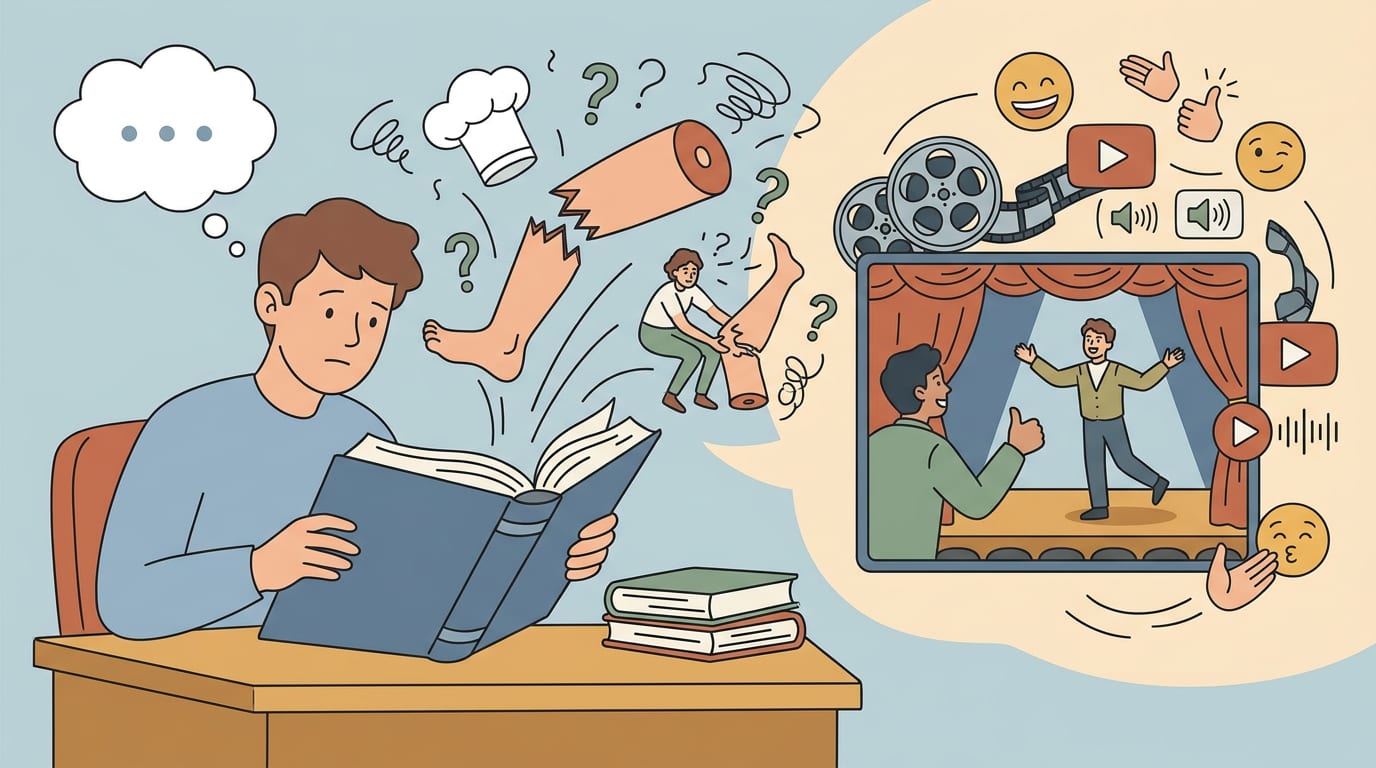
When you encounter an idiom like "break a leg" or "piece of cake," looking up each individual word in a dictionary usually leads to a dead end. If you translate these phrases word-for-word, the meaning becomes nonsensical. This is the primary reason why learners often feel stuck; they are trying to apply logic to language that is inherently figurative. To truly learn English idioms from context, you must stop treating these phrases as a collection of separate words and start viewing them as a single, indivisible unit of meaning.
Dictionaries provide definitions, but they rarely capture the emotional weight or the specific social situation where an idiom belongs. For instance, knowing that "it's raining cats and dogs" means heavy rain is helpful, but it doesn't tell you that this phrase is actually quite old-fashioned and rarely used by native speakers today. When you rely solely on a dictionary, you miss the nuances of register and tone. You might use a formal idiom in a casual setting, or vice versa, which can make your speech sound slightly mechanical or outdated. By focusing on how to understand idioms in movies and short clips, you begin to see the social environment in which these expressions thrive.
One common mistake learners make is assuming that idioms are interchangeable across all dialects or age groups. You might find a phrase in a classic film that sounds perfectly standard, only to discover that it is considered archaic or even offensive in contemporary speech. This is why watching modern content is essential; it provides a real-time pulse on how language is currently being used, helping you avoid the social friction that comes with using outdated slang in a professional or modern social environment.
At https://vidvocab.com/, we believe that the best way to bridge this gap is to see these expressions in action. Instead of memorizing long lists of idioms, you should observe how a speaker’s face changes when they use a specific phrase. Are they smiling? Do they look frustrated? These details are the keys to understanding usage. When you stop relying on a static definition and start observing the living, breathing context of a video, you move closer to the way native speakers actually acquire their language. This shift in perspective is the first step toward true fluency.