
How to notice English grammar in videos instead of reading textbooks
1 November 2026 · how to identify grammar in videos · grammar in context practice · learning English grammar through media · English grammar
By the end of this post, you will be able to transform your daily YouTube habit into a powerful tool to learn grammar from context without ever opening a dusty textbook again.
💡 Ditch the Textbooks for Media

You can learn English grammar using our free platform
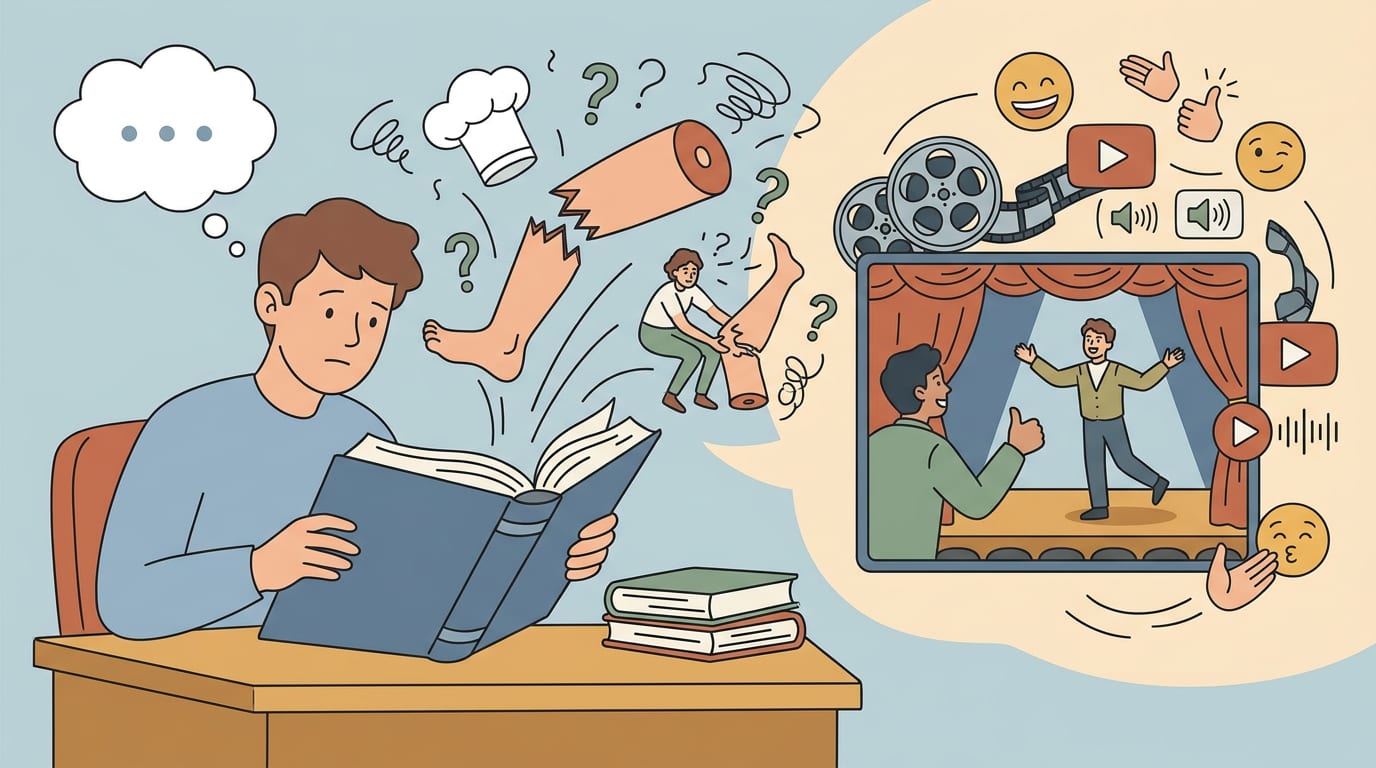
Many students believe that the only way to master complex structures is to sit down with a heavy grammar book and complete endless gap-fill exercises. However, learning English grammar through media is often more effective because it shows you how native speakers actually communicate. When you watch a video, you see the tone, the facial expressions, and the situation that dictates why a specific tense was chosen over another. This is the essence of grammar in context practice.
Textbooks provide rules, but they often lack the messy, beautiful reality of spoken English. In a video, you might hear a speaker use the present perfect continuous in a way that feels natural, even if it feels confusing on the page. When you watch, your brain maps the sound of the language to the situation. This creates a stronger memory anchor than rote memorisation. If you are struggling to spot these patterns on your own, you can use https://vidvocab.com/ to detect the grammar used in any YouTube video. The platform provides clear explanations in your mother tongue alongside English, which bridges the gap between passive listening and active understanding.
- Exposure to real-life rhythm and intonation
- Seeing grammar as a tool for communication, not just a list of rules
- Understanding the emotional subtext behind sentence choices
When you rely on media, you are not just memorising a rule; you are building an intuition for how the language flows. Start by picking content you actually enjoy, such as vlogs, interviews, or short documentaries. The goal is to keep your brain engaged with the topic so that the grammar becomes a secondary, yet essential, part of the experience.