
Best way to use YouTube to improve English listening
16 October 2026 · how to improve english listening using youtube · active listening with youtube videos · study english with youtube videos · English listening
By following a structured approach to your daily screen time, you will be able to extract meaningful language data from any video, identify tricky grammar points, and systematically expand your vocabulary without feeling overwhelmed.
🎧 Stop Watching and Start Listening

You can learn English grammar using our free platform
Most learners assume that keeping YouTube on in the background while doing chores will eventually lead to fluency. Unfortunately, this passive approach rarely yields results for B1-B2 learners. When you listen without focus, your brain treats the audio as white noise, filtering out the nuances of sentence structure and unfamiliar vocabulary. To truly improve, you must treat your screen time as a workout rather than entertainment.
Active listening with youtube videos requires your full attention for short, intense bursts. Instead of watching a twenty-minute vlog, choose a three-minute segment that interests you. Your goal is to understand not just the general message, but the specific mechanics of how the speaker expresses their ideas. This means paying attention to how they link words together, where they place stress, and which grammatical structures they choose to convey timing or hypothetical situations. When you stop being a passive consumer and start being a language detective, you move from merely hearing sounds to internalising the rules that govern the English language.
One common mistake learners make is focusing entirely on individual words rather than the rhythm of the speech. English is a stress-timed language, meaning the time between stressed syllables remains relatively constant regardless of how many unstressed syllables fall in between. If you find yourself struggling to follow a fast-paced speaker, try to tap your finger along to the primary stressed words in a sentence. By shifting your attention from the rapid-fire consonants to the rhythmic "beats" of the sentence, you will find it much easier to anticipate what is coming next, even when the speaker uses complex vocabulary or unfamiliar phrasal verbs.
📈 The 80/20 Rule for Input

You can learn English grammar using our free platform
To study english with youtube videos effectively, you must balance difficulty with comprehension. The 80/20 rule suggests that you should aim for content where you understand roughly 80 percent of the vocabulary and grammar, leaving 20 percent as new, challenging material. If you understand everything, you are not learning anything new. If you understand less than half, you will quickly become frustrated and lose motivation.
- Select content based on interest: If you enjoy technology, watch tech reviews. If you like cooking, watch recipe tutorials.
- Check the speed: Avoid speakers who talk too quickly. Look for clear, standard accents rather than heavy regional dialects.
- Use the transcript: Before you start, scan the captions to see if the density of unknown words feels manageable.
If you want to do this with video you actually enjoy, you can use https://vidvocab.com/ to process the content. The platform fetches the transcript for any video and features an English grammar detection system that highlights tenses and modals directly on the captions as you listen. It also uses a smart subtitle system that only translates words above your current level, keeping your focus on the English text while building your vocabulary. All the words and grammar you encounter are stored in a personal dashboard, and you can test your progress with built-in quizzes that use the same video content to reinforce what you just heard.
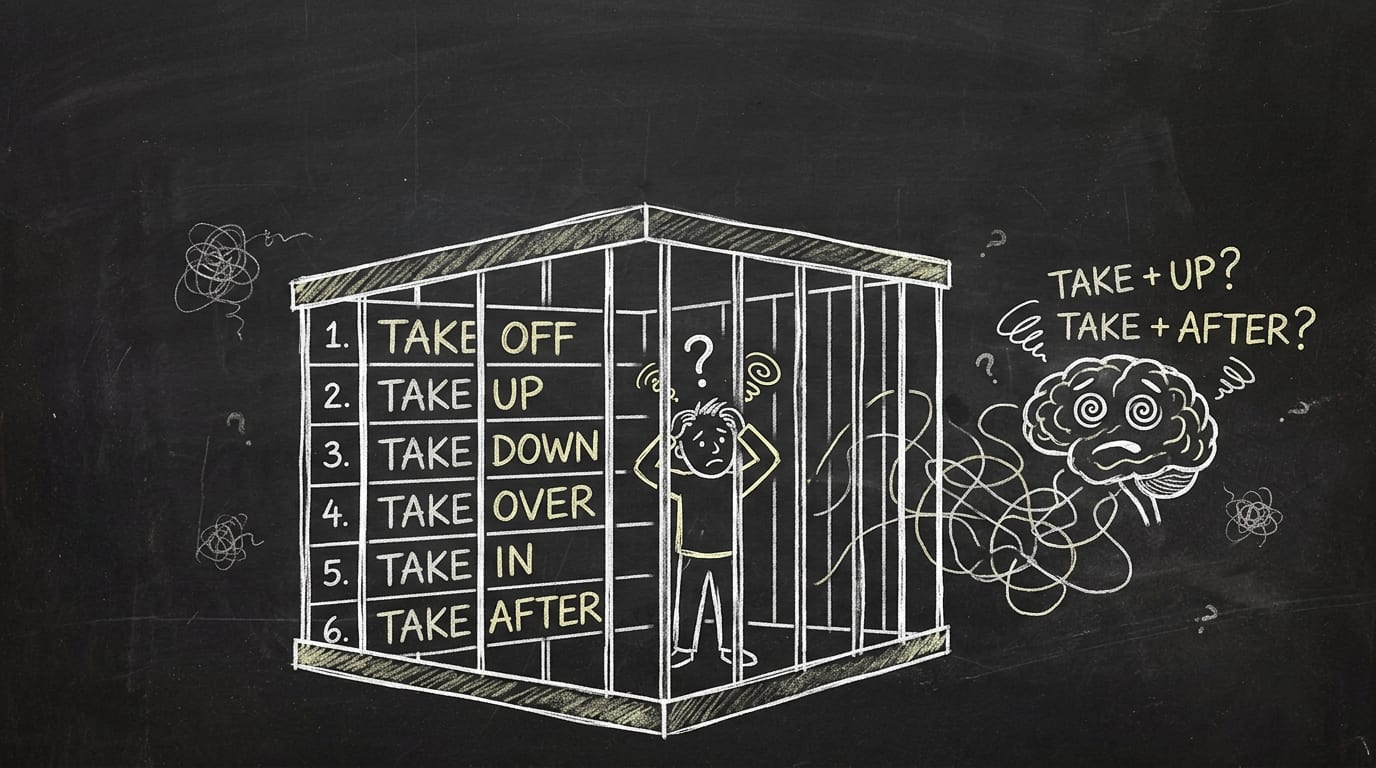
For example, if you are watching a video about sustainable architecture, you might encounter advanced vocabulary like "biophilic design" or "carbon neutrality." Instead of looking up every single word, focus on the grammar patterns that surround these terms. If the speaker uses the present perfect tense to describe a project's completion, ask yourself why they chose that tense over the simple past. By utilizing a tool that highlights these specific structures, you transform a general video into a targeted grammar lesson that reveals how native speakers logically sequence their arguments in real-time.
🛠️ Tools for Deeper Analysis
You can learn English grammar using our free platform
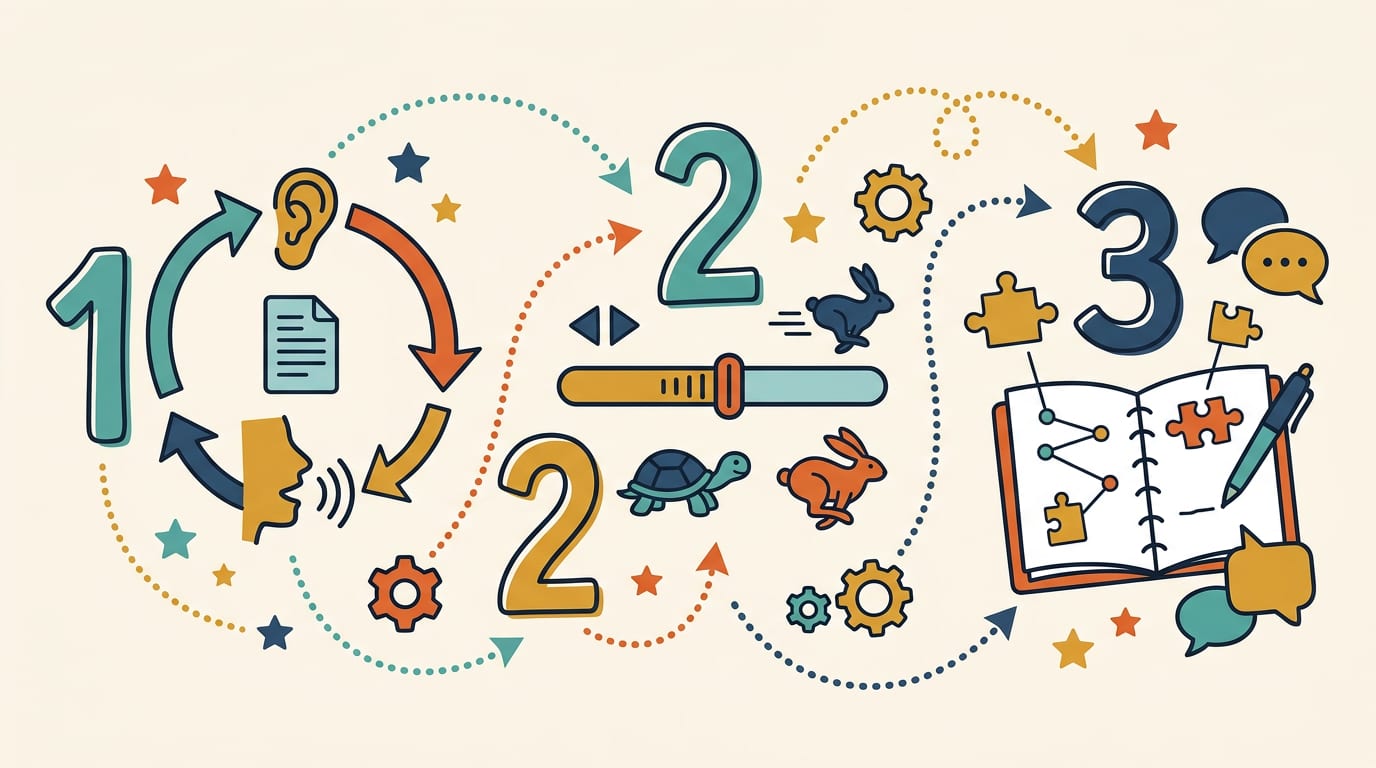
Once you have selected your video, you need specific techniques to break down the speech. The most common mistake learners make is listening to a whole video without pausing. Instead, use the looping function to listen to the same sentence three or four times. The first time, just listen. The second time, read the transcript. The third time, repeat the sentence out loud, mimicking the speaker's intonation and speed exactly.
Slowing Down the Audio
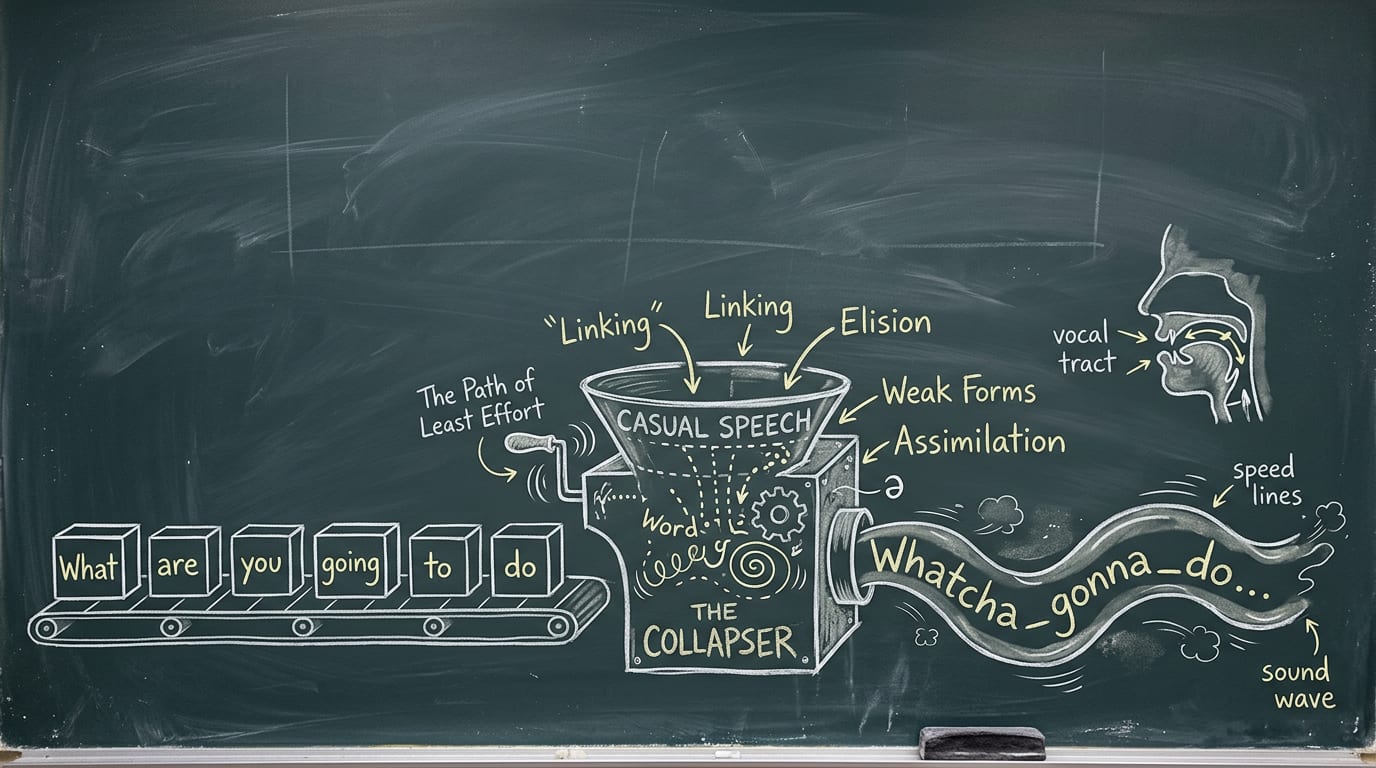
YouTube allows you to adjust the playback speed to 0.75x or 0.5x. This is a game changer for catching those elusive connecting sounds, such as when 'going to' becomes 'gonna' or when words blend together in rapid speech. Do not rely on slow speed forever, but use it as a scaffold to understand the structure of a sentence before you return to normal speed. Once you can hear the individual words at a slower pace, your brain will be much better at identifying them when the speaker returns to their natural tempo.
Vocabulary Logging
Do not try to write down every new word you hear. This is exhausting and counterproductive. Instead, pick three to five words that seem essential to the speaker's main point. Write them down in a notebook or a digital list, but include the context. A word is almost always easier to remember when it is attached to a specific memory of how it was used in that particular video. Review this list before you start your next session to ensure you are building a bridge between your passive and active vocabulary.
Another effective strategy is to note down "collocations" rather than isolated words. A collocation is a group of words that naturally go together, such as "make a decision" instead of "do a decision." When you hear a useful verb in a video, pay close attention to the preposition or noun that follows it immediately. If you record these pairings in your log, you are learning the natural "texture" of the language rather than just memorizing dictionary definitions. This habit significantly reduces the time you spend searching for the right word during conversations, as your brain begins to store language in meaningful, ready-to-use chunks.
📅 Building Your Daily Routine
You can learn English grammar using our free platform
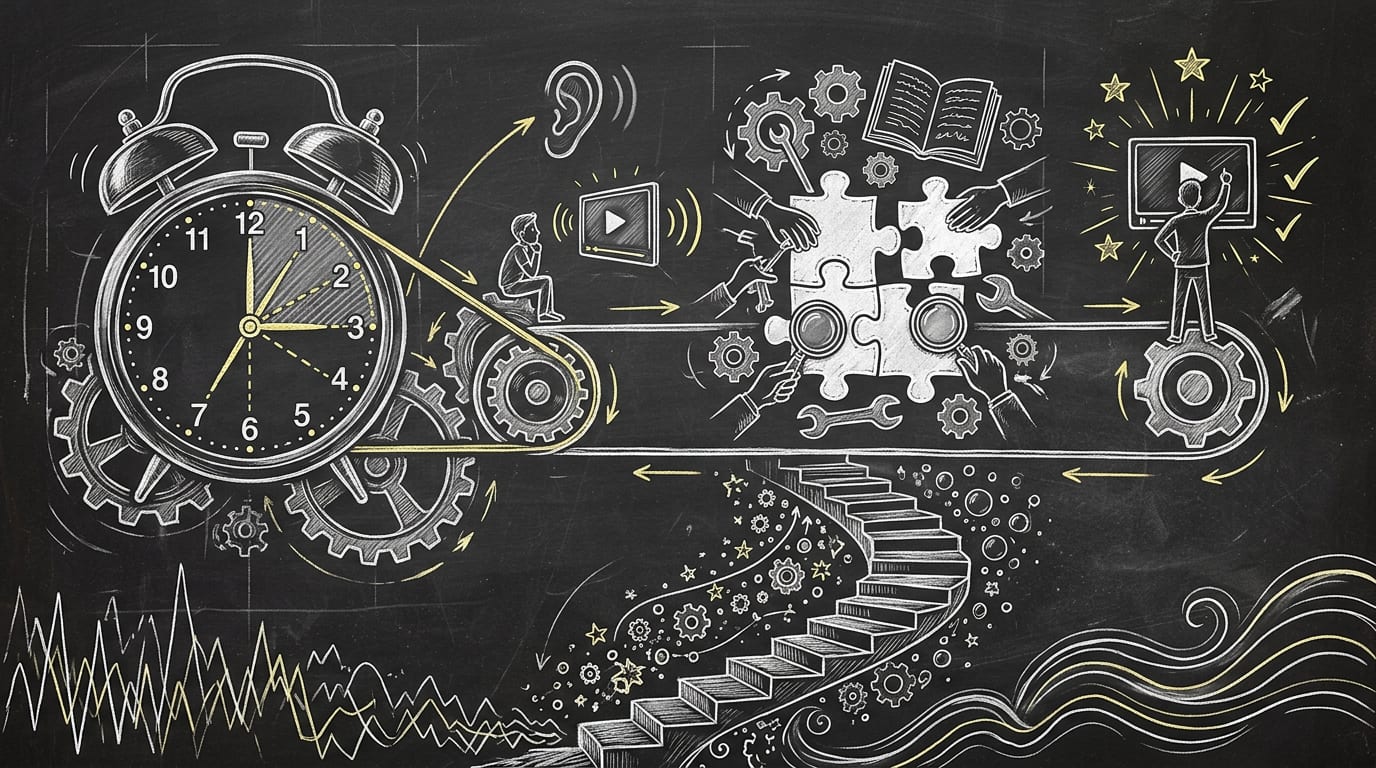
Consistency is the engine of language learning. You do not need two hours a day; fifteen minutes of focused, high-quality practice is far superior to an hour of distracted watching. Create a routine where you open your chosen video, complete your loops, and finish with a quick summary of what you learned. By doing this at the same time each day, you remove the friction of deciding what to study.
Start by dedicating the first five minutes to watching the clip without any support to gauge your baseline understanding. Spend the next seven minutes using your chosen tools to dissect the difficult sentences and look up new vocabulary. Use the final three minutes to watch the clip one last time, without any subtitles, to see how much your comprehension has improved. This immediate feedback loop is incredibly satisfying and provides a clear sense of progress. Remember that you are not trying to memorize the dictionary; you are trying to train your ears to recognize patterns. Over time, these daily fifteen-minute sessions will compound, turning the once-confusing stream of English speech into something clear, familiar, and easy to follow.